Working with the last leaves of the season
This blog documents an experiment I carried out in late autumn, just before preparing my garden beds for winter. Due to personal and difficult circumstances, I wasn’t able to explore fresh-leaf indigo printing as early in the season as I had hoped. By then, many of my Japanese indigo plants had already entered their flowering stage.
Having nurtured these plants from the very beginning of the year — from sowing the seeds to watching them grow and tending to them throughout the season — I wasn’t quite ready to let go of them without making the most of what they still had to offer. I had put so much time and care into growing them that I decided to experiment with the remaining leaves, despite knowing that the timing wasn’t ideal and without setting any great expectations for the outcome.
There is something special about working with fresh indigo leaves. Unlike traditional indigo dyeing, which involves extracting the pigment and preparing a dye vat, fresh-leaf printing allows us to explore the colour potential of the plant directly, without going through the vat dyeing process.
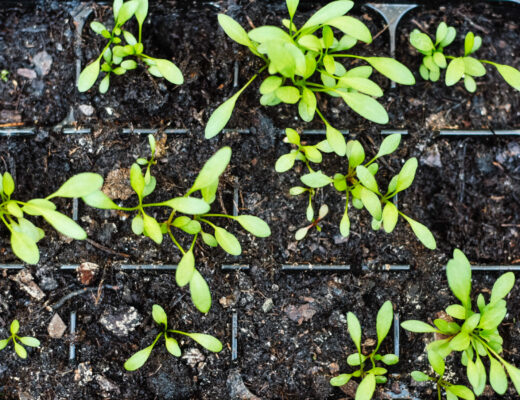
As the season was drawing to a close, I noticed a few plants in my dye garden bed that were still a little behind in their flowering cycle. They had begun to form buds but had not yet flowered, and still carried enough leaves for me to gather and use for printing and extracting pigment. It was a small window of opportunity to work with the plants before the season came to an end.
What followed was less about achieving a particular shade of blue and more about curiosity, experimentation and making use of what the garden still had to offer at the end of the season.
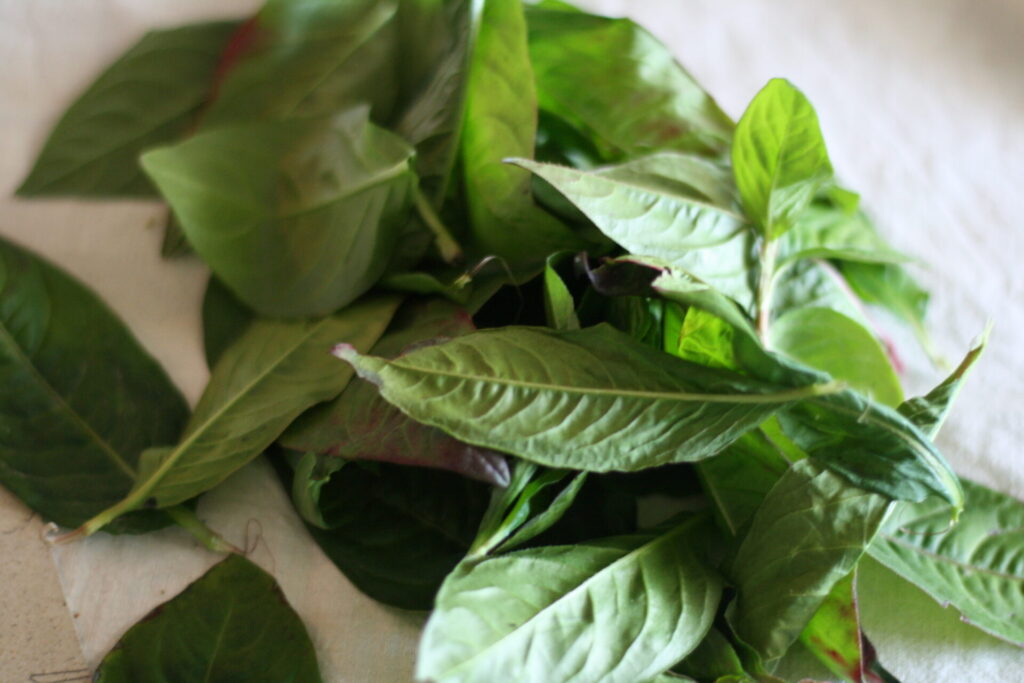
Freshly harvested Japanese indigo leaves from my dye garden.
Preparing the Indigo print paste
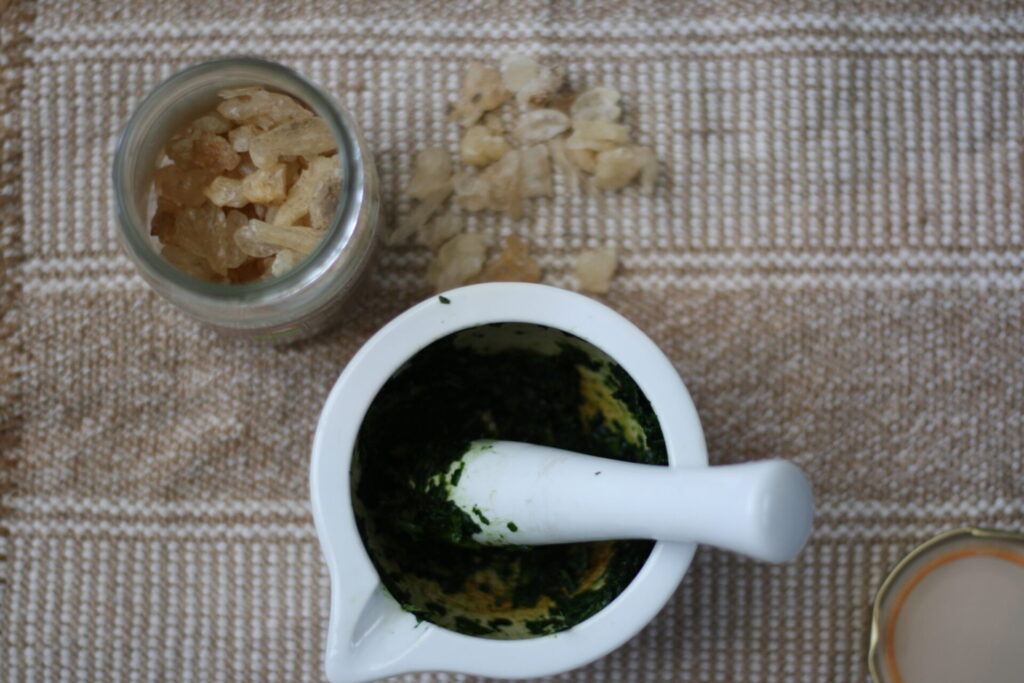
I began by macerating the fresh leaves to release their pigments and cellular contents. I then transferred the macerated leaves into an old stocking, which served as a simple straining pouch and helped me work with the leafy material more easily.
To improve the consistency of the paste, I added a little gum tragacanth. This natural plant-derived gum increased the viscosity, making the mixture easier to handle and spread through the stencil without becoming too watery.
Preparing the fabric
The fabric preparation was just as important as the printing itself.
I used cotton fabric that had been thoroughly washed to remove any finishes or impurities that might interfere with the printing process. It had also been cured with fresh soy milk over a period of three weeks.
Soy milk treatment helps deposit a layer of soy proteins onto the cotton fibres.
These proteins can provide binding sites for natural colour compounds, improving their ability to adhere to an otherwise cellulose-based fibre.
Printing through a handmade stencil
For the design, I made a simple stencil from cardboard. The prepared indigo leaf paste was then applied through the stencil onto the soy-treated cotton.
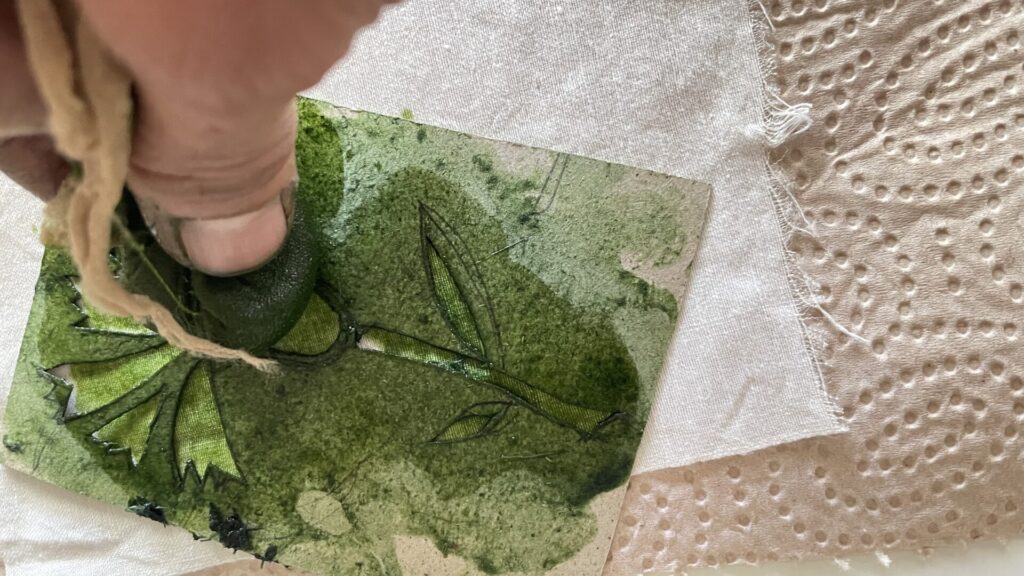
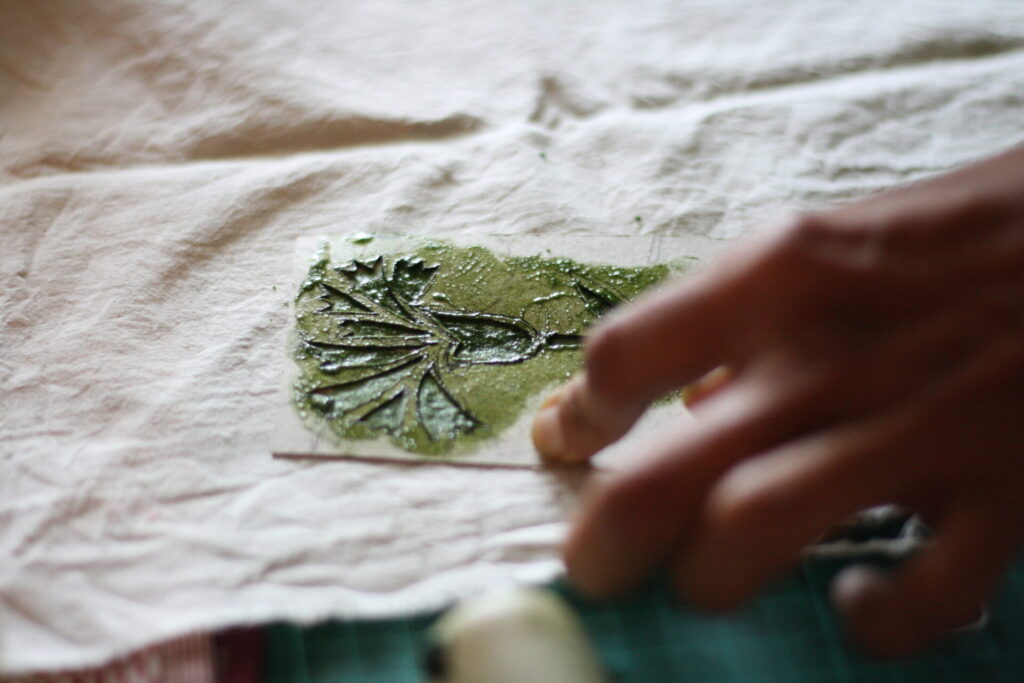
Once the printing was complete, I left the fabric undisturbed for 48 hours to dry. I subsequently fixed the print with a hot iron and gently washed the fabric with water to remove the remaining plant material.
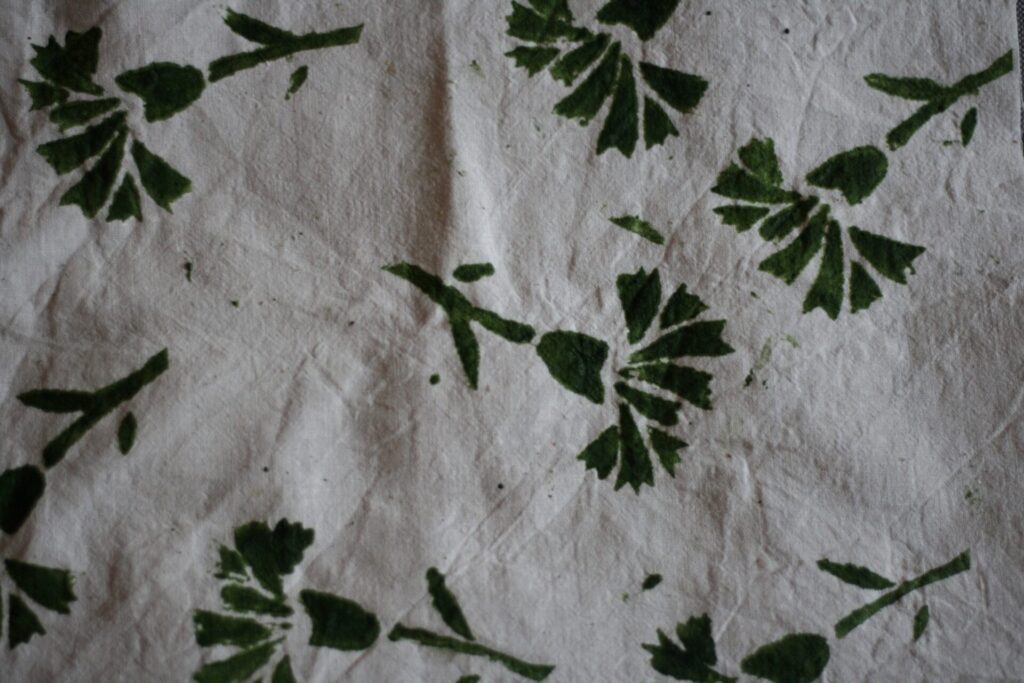
Cotton fabric freshly printed with Japanese indigo leaves
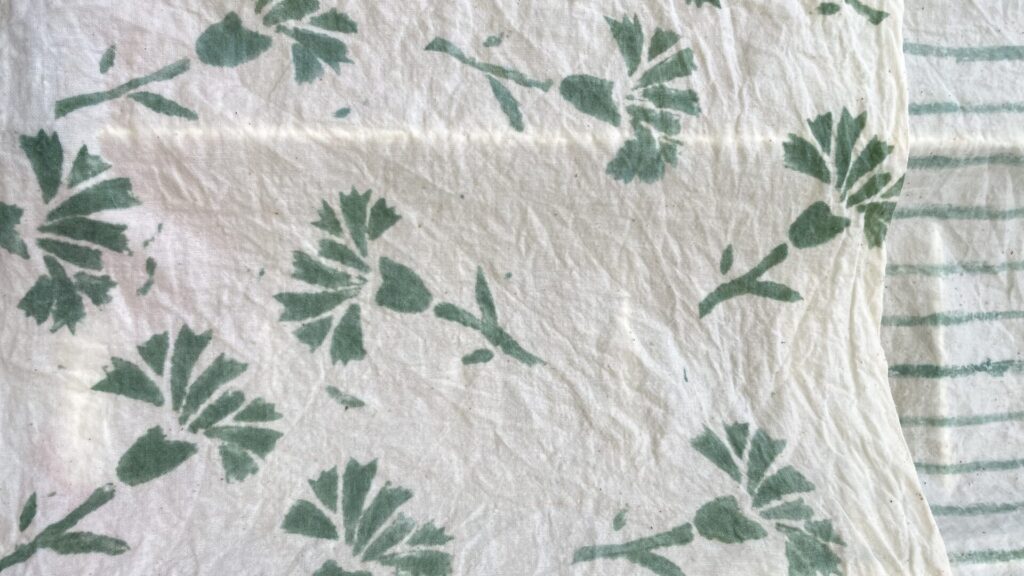
After drying and washing
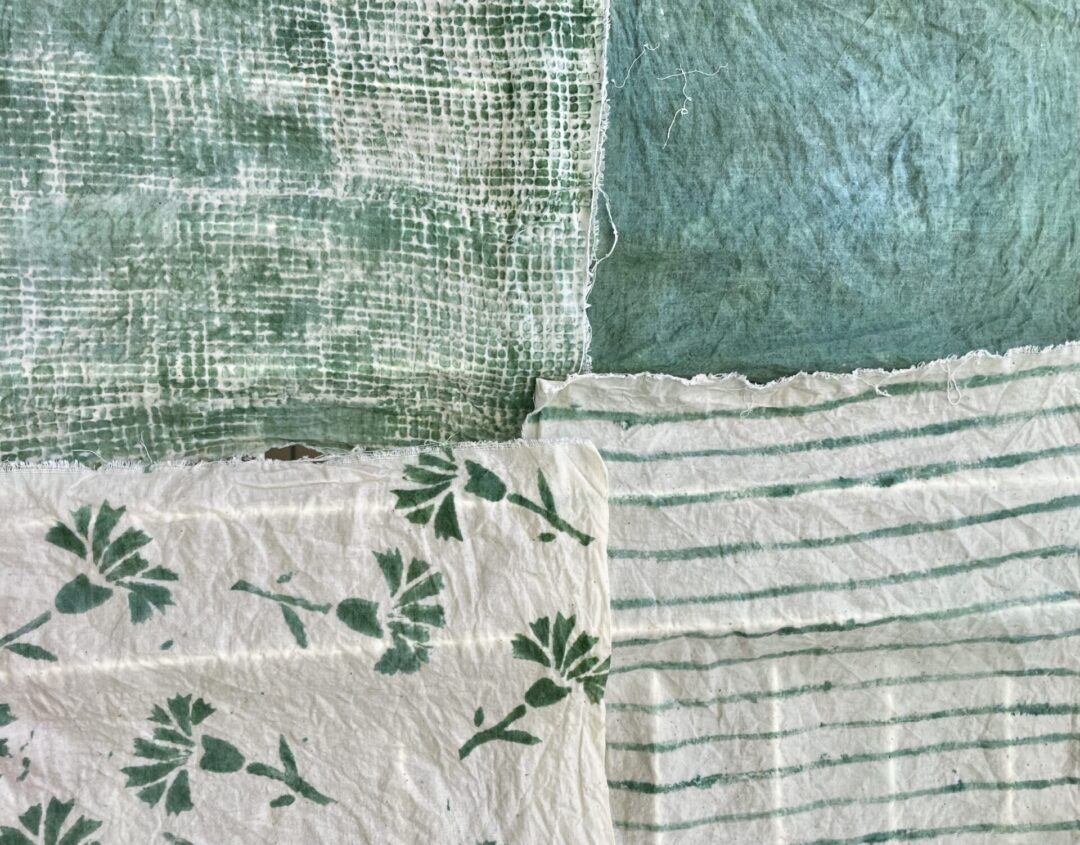
After washing and drying, the print revealed a pale teal-blue shade rather than the deep blue one would typically expect from indigo. Nevertheless, I was quite content with the outcome of this experiment. The intense green of the freshly macerated leaves had gradually transformed into a soft, pale teal blue. Interestingly, this is the very same shade I often obtain when extracting pigment from my Japanese indigo plants and subsequently processing it into watercolour paints.
Fresh-leaf printing generally works well on silk, as the fibres require no special preparation beforehand. I therefore also experimented with handspun Khadi silk, curious to see whether it would yield a different result. However, the outcome was much the same, with no particularly noticeable difference in colour intensity or print definition.
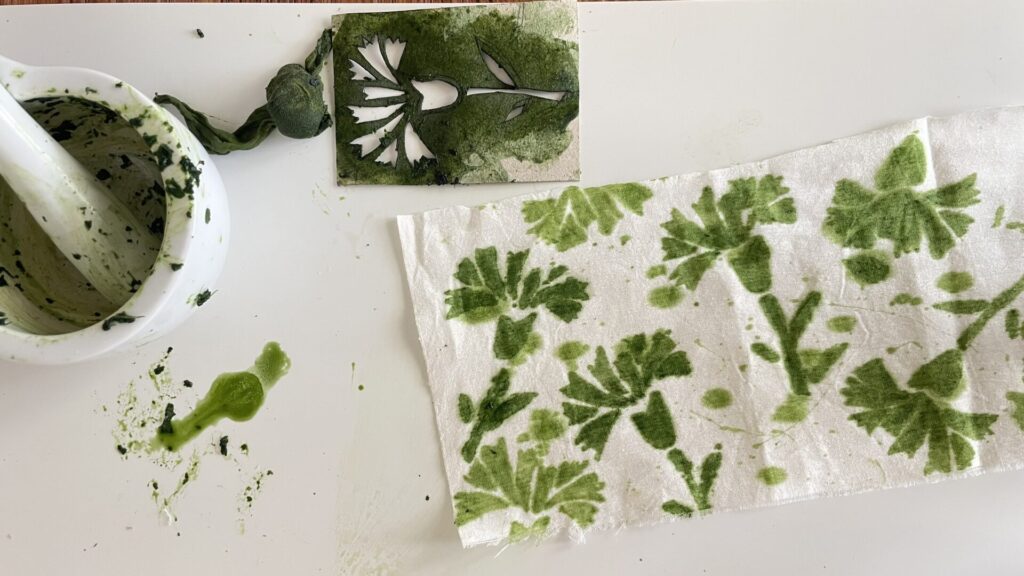
Handspun silk fabric printed with fresh Japanese indigo leaves.
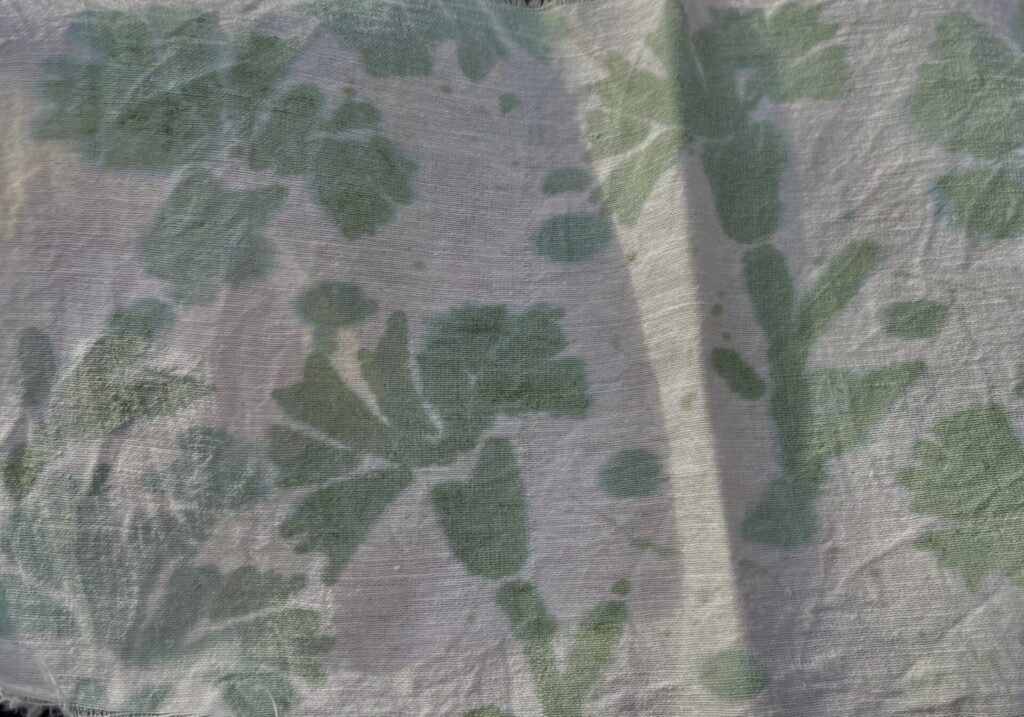
Subtle hints of teal blue emerging on the silk after curing and washing.
Where was the characteristic indigo blue?
One of the most fascinating aspects of working with fresh indigo leaves is the chemistry behind the colour transformation.
In Japanese indigo (Persicaria tinctoria), the blue pigment we associate with indigo dyeing is not stored in the living leaves in its final form. Instead, the leaves contain a colourless precursor called indican (indoxyl-β-D-glucoside). Within the intact plant cells, indican and the enzyme responsible for breaking it down, β-glucosidase, are stored in separate cellular compartments.
When the leaves are crushed or macerated, their cellular structures are disrupted, allowing these two components to come into contact. The enzyme β-glucosidase then hydrolyses indican, releasing indoxyl and glucose.
Indoxyl is highly reactive and, when exposed to oxygen in the air, undergoes oxidation. Two indoxyl molecules combine to form indigotin, the insoluble blue pigment responsible for indigo’s characteristic colour. This is why crushed fresh indigo leaves can gradually develop a blue coloration as the chemical reaction takes place.
The print did not develop the characteristic deep indigo blue. Instead, the resulting colour was a faint teal, with a subtle greenish-blue undertone.
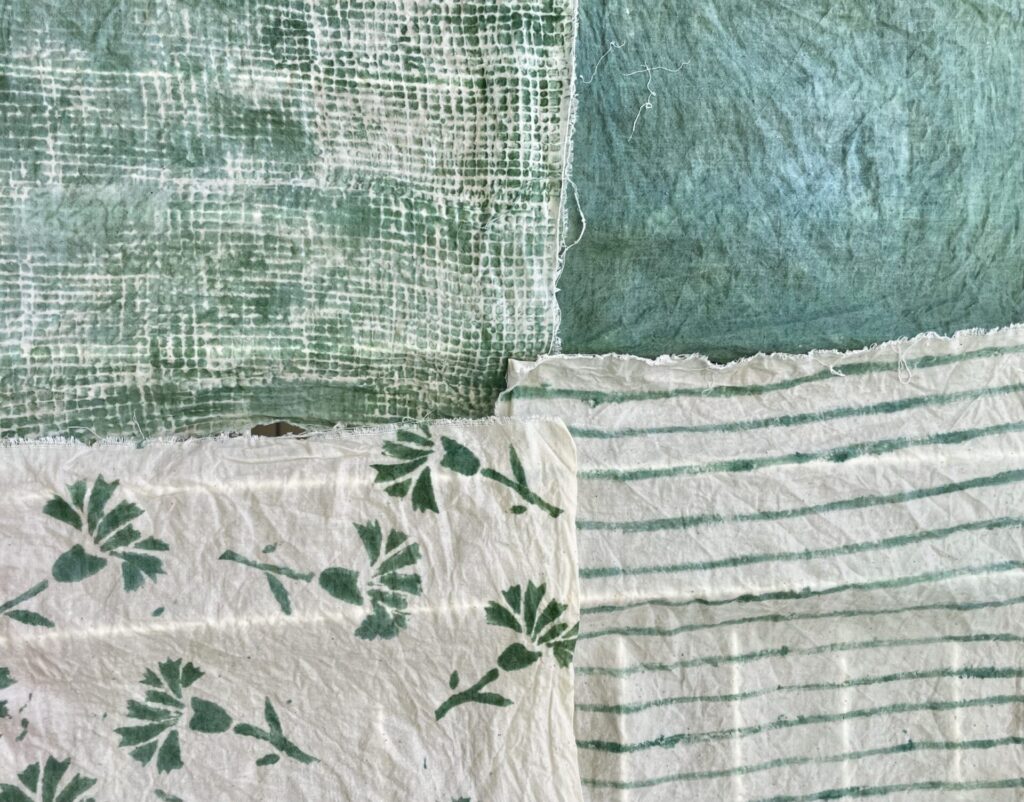
An experiment, not just a print
Why did the colour remain so faint and teal?
There are several possibilities worth exploring. The plants were already approaching flowering, and their pigment precursor content may have differed from that of younger, actively growing plants. The extent of cellular disruption, enzyme activity, oxygen exposure and the conditions during drying could also have influenced how much indigotin formed.
It is also possible that the final colour reflects a mixture of indigo-related compounds and residual plant pigments rather than a strong accumulation of indigotin alone.
I would not draw a definite conclusion from this one experiment. Instead, it leaves me with a few questions for the next growing season.
Natural colour is rarely entirely predictable. Sometimes the most interesting learning comes not from achieving the colour we expected, but from observing what actually happens.
And that, for me, is part of the joy of working with plants: every experiment offers another opportunity to look more closely, understand the chemistry and learn from the living material.


No Comments